Note taking - My New Rabbit Hole
11-11-2025
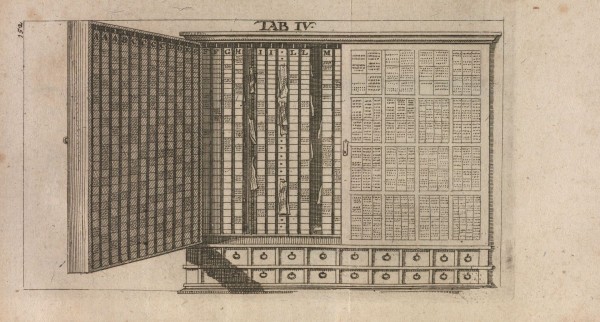
What can be more exciting to learn than learning how to learn? I'm, so glad I found this new rabbit-hole to dig myself into instead of concentrating on learning Web Development.
Ok, sounds dull, but it can be more important that most people think. Certainly more than I had hitherto understood. Specifically, I'm learning about the Zettelkasten method.
Why this one in particular, is it just a fashion because all the youtubers in "productivity YouTube" are talking about it? I don't know, maybe. Is there really something wrong with copying something because you notice that lot of people you consider smarter than you are doing it?
But what's so special about Zettelkasten? Well, the youtubers keep trying to make it way too complicated, in my opinion, with different types of notes, numbering systems and whatnot, and I'm sure those things have their use, particularly if you are being very scholarly about it —or I don't know, maybe as it grows I'll find that a strong classification system was always important—, but in my mind, you can boil the main principles of the method down to a few points:
- Atomic notes. Also called "modular". Whatever you call it, the point is: keep notes as short as possible, one idea per note.
- Conectivity. Link every single note to something else, otherwise the above point is useless. Whether you are doing it digitally or physically —some people love to romaticize the process, there's nothing wrong with that—, use hyper-links and tags, or complicated numbering and classification systems.
- Bottom-up rather that top-down. By this they mean that you start taking notes and each note can connect to many different topics, can be used later in one essay or another, it doesn't belong to one specific project. So instead of creating a folder for one project, and in that folder creating another folder for one sub-chapter, or one topic, etc, and overthinking where specifically does this tiny note go and then struggling to find it because you can't remember where in your over-complicated folder structure you put that note; instead, write notes on a global folder and the links and tags are what provide the structure, you can also create indexes with links to all the notes that touch on each topic, and one note can be linked on various different indexes. When you need to find your notes on a certain topic you can refer to the index or you can simply search by tags or keywords (if you are doing it digitally).
That's pretty much it. But I admit I have only scratched the surface so far, there are dozens of books published and thousands of hours on YouTube on the subject; must be for a reason, right? But I do believe that's the essence of it.
Of course, you might be tempted to create some folders to organize your thoughts, but keep it general. And of course, what "atomic" notes mean, or exactly how short they have to be, is very debatable; whatever feels to you like it's a single self-contained idea, I suppose. And how do you know what to link, what tags to add? That's for you to create your own system, that's the beauty of it.
Why this is such a revelation
All the youtubers like to credit a german sociologist named Niklas Luhmann for the creation of this method in the 1950's, but it takes just one quick trip to Wikipedia and a skim through the article for Zettelkasten to learn that that dude is almost just a foot-note in the long history of "taking short notes, putting them in a box and classifying them somehow for later use", that's a rough translation of what the name means... kind of. Not to say he is not famous for good reason, it is said that when he died, he left an archive of over 90,000 notes and that throughout his carreer he wrote more than 50 books and 400 scholarly articles, and he credited his system for that. But the idea has been around since the 17th century
[EDIT]I dug a little deeper in that; Luhmann did innovate some. The main idea of keeping notes in a box for later, organizing them and linking them had been in use for centuries by many academics and writers as a form of organizing and classifying their information, mainly; for Luhmann, aparently, it was much more than that, it became a system of thinking; he even credited his Zettelkasten as co-author in some of his books and papers. So no hate to him, but I still do find that constant repeating of "The Zettelkasten method was invented by Niklas Luhmann" as if it were an indisputed fact rather annoying. A more factual way of putting it would be to say that the modern methodology and concept of the Zettelkasten as not only a research tool but as a complete paradigm for organizing thought was established by Niklas Luhmann. But anyway... man yells at cloud, I know.
What it means for me, personally is: well, I've been self learning stuff ever since I can remember, and plan to keep doing it until I die —I'm 39, so hopefully, I'm just about half way there—, but you see, I've also forgotten a lot, probably entire books worth of knowledge that once felt so present, and as soon as I moved on to something else it just went through the window, aparently. I heard this factoid in one of the videos I've been binge watching the past few days on the subject: "9 out of 10 people, when they die, they have at least one book's worth of knowledge in their head", and then that knowledge is lost forever. I think 9 out if 10 is an overestimation, at least if we are talking about useful knowledge... but maybe that's not the point at all, it doesn't have to be useful to anybody else but the person doing it to be worthwhile.
In any case, the problem has two parts: 1) How do you avoid forgetting... or rather, loosing all the stuff that you learn, because the whole point of a system like this is that you have access to the information and, particularly, to your own insights and thoughts, even if they don't live permanently in your head anymore; and 2) how do you get all that knowledge out of your head into something public and tangible, something real. This blog and other projects and writings are one way, for me, of doing that, of course, but there's a ton more thoughts that pass through my head and I want a way to retain them. Oftentimes I find myself thinking "just a few weeks ago (or a few months, or last year, or maybe even many years ago...) I was thinking and learning about xyz topic very intensely, be cool to not have forgotten most of it", maybe not to completely immerse myself in it as before, but just to remind myself of what I had supposedly learned; and not just to access the information again, for that I could just re-read the same books if I wanted (if I had the time), but to access the thoughts and insights I was having then. For example, just a couple years ago I was super into personal finance and I like think that at least a few things stuck with me, but there's a lot more that I've forgotten. That's one problem I want to try and fix by keeping notes in a more organized and permanent way from now on.
My mind is a river, I'm building a dam on it.

I really don't want to die without putting at least some of my knowledge out into the world. If only I had something to help me just pull it out of my brain and into book form and doing all the work for me... alas, that magical tool doesn't exist (LLM's don't really count), so the work has to be done —not to mention that it is still to be determined whether the knowledge in my head is usefull to anybody else. But I think having a method for systematizing both the keeping and production of said knowledge will make it much easier to at least put that to the test.
So for me it's not about strictly following Luhmann's Zetelkasten method, or anybody else's; it's not even about following a general zettelkasten guideline, the method itself may change in the future; the real insight here, what I've been pondering, and what I would like to think that I've finally learned —[No es sólo aprender, sino aprehender]— is the value of systematizing knowledge.